How to Defeat Work Stress in Under 5 Minutes
Oct 26, 2026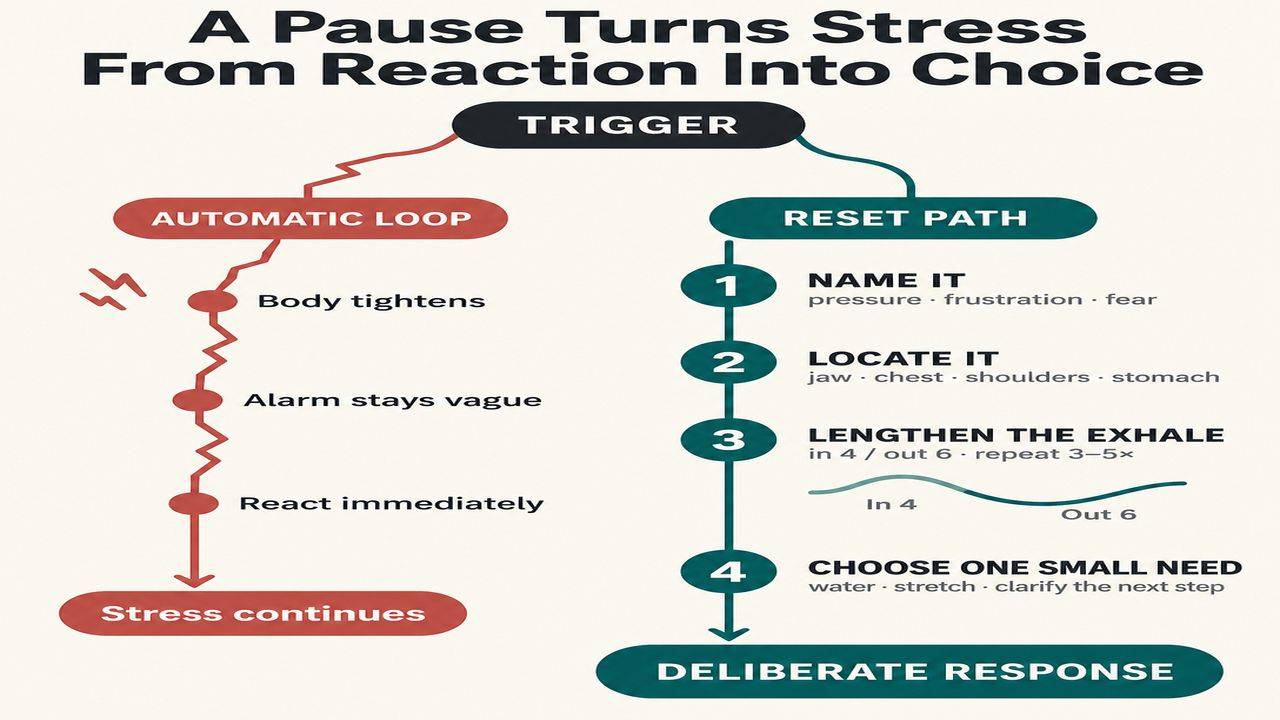
The quick version: Work stress follows you home, but you can reset it at your desk in under five minutes. You pause, ask three questions, breathe slower with a longer exhale, and pick one small action. Boundaries, a daily habit, and speaking up keep the stress from piling back on.
-
Pause and ask: What am I feeling? Where is it in my body? What do I need?
-
Breathe in for four and out for six, three to five times. The longer exhale calms your body because it activates the vagus nerve.
-
Protect your energy with one small boundary, like no work notifications after 7 p.m.
-
Practice two minutes a day, because short daily reps beat rare long sessions.
-
Ask for help with a specific request, because vague stress gives your manager nothing to act on.
A few years ago, I was riding home in an Uber after a long day of back-to-back meetings. My jaw hurt. My shoulders were up near my ears, and I was holding my phone so tight my thumb went numb. I felt angry and had no idea why... and no idea what to do about it. The meetings were over, but the stress had climbed into the back seat with me.
That ride taught me something I still use every single day.
Work stress does not clock out when you do. It follows you home and sits on your chest at 2 a.m. while your mind replays a deadline. You snap at your family over something tiny, and the hobbies you used to love start to feel like chores. If you have ever sat in your parked car for ten extra minutes because you were not ready to walk inside yet... you are in good company here.
Powering through feels strong in the moment. In my experience, it just stacks more weight on the pile. The pressure you ignore at 10 a.m. is still pressing on your shoulders at 10 p.m., only heavier.
So here is what I will walk you through... a reset you can run in the middle of a busy workday. It takes less than five minutes. One part is so quiet you can do it in a meeting while your boss is talking, and they will not notice a thing 😄
You can also watch the full video version right here:
I am Mike Veny, a Certified Corporate Wellness Specialist, and I talk with teams about workplace mental health for a living. My goal here is simple... get you back in the driver's seat, so you can breathe, think, and choose your response instead of reacting to the chaos.
Why Does Work Stress Feel So Heavy Right Now?
You are not imagining it. According to the Aflac WorkForces Report, 75% of U.S. employees are dealing with workplace stress, and 35% report high or very high levels. That is a six-year high.
Burnout is right behind it. Research shows that 55% of U.S. workers currently experience burnout... and 42% of them never tell their managers.
That 42% number stuck with me. Close to half of the workers who are burning out carry it alone, quietly, at their desks. If that is you right now, nothing is wrong with you, and you can start changing it today.
Why it counts: Stress is at a six-year high, and many workers hide it. Tools you can use alone at your desk give you a way to act on it starting today.
Step 1: How Does the 3-Question Reset Work?
It all starts with a pause. An angry email lands, a deadline jumps up a week, and your body tenses before you have even finished reading. Your mind speeds up, you slide into panic mode, and the panic piles on even more stress. The pause breaks that loop.
So before you fix anything, stop and ask yourself three questions. It takes about one minute.
Question 1: What am I feeling right now?
Be specific. “Stressed” is too vague. Name it... pressure, frustration, anger, fear of messing up. Once you name the emotion, it shrinks from a big scary monster into something you can actually work with.
Question 2: Where is this feeling in my body?
A lot of people skip this one. I think it is the fastest way to figure out what is really going on. Check your chest, your jaw, your shoulders, your stomach. Your body tends to tell the truth before your brain catches up.
Finding the spot gives you a little distance from the feeling. “I am frustrated” turns into “I feel frustration in my shoulders.”
That small shift puts you back in control.
Question 3: What do I need right now?
You do not have to solve the whole problem right now. The answer is usually simple, like three slow breaths, a glass of water, or thirty seconds of stretching. One small action is enough to pull you out of panic.
Bottom line: Three questions, under a minute. Even messy answers count as a win, because naming the feeling is what slows the spiral down.
Step 2: How Can You Breathe Your Stress Down at Your Desk?
Once you have named the stress, the next step is to turn its volume down in your body. Your breath is the fastest tool for that. You need zero equipment, and the coworker sitting next to you will not know you are doing it.
One fix first. When people hear “deep breathing,” plenty of them start gulping air and get dizzy. I did this for years, honestly. Think slow breathing instead, because the pace matters most and the exhale does the heavy lifting.
Here is the exercise:
-
Put one hand on your stomach. Under the desk works fine.
-
Breathe in slowly through your nose for a count of four. Feel your belly push your hand out.
-
Exhale slowly through your mouth for a count of six.
-
Repeat three to five times.
The longer exhale is the key. Research shows that longer exhalations activate the vagus nerve, raise heart rate variability, and lower stress in about two minutes. In one study, people even answered business questions more accurately after two minutes of this breathing. Calmer and sharper at the same time... I will take that deal!
💡 Tip: Try this right before a big call or right after a meeting that got under your skin. When you do it matters more than where you do it.
Bottom line: Breathe in for four, out for six, three to five times. The long exhale calms your body down, and you can do it anywhere.
Step 3: Which Boundaries Actually Protect Your Energy?
Breathing takes care of stress in the moment. Some stress keeps coming back until you deal with where it comes from. Boundaries help with that part.
A boundary protects your energy so you can actually do your job well. You can be kind and still have them. The coworkers who respect your time are usually the ones who protect their own.
Being "always on" is one of the biggest causes of ongoing stress, because checking email all night keeps your brain and body from ever fully clocking out. The data backs this up... only 49% of U.S. workers feel comfortable disconnecting after work, and 1 in 4 work outside their scheduled hours most of the time.
Your boundary can be small. Choose one thing you actually control:
-
Turn off work notifications after 7 p.m.
-
Take 20 minutes of your lunch break away from your screen.
-
Add a 10-minute buffer between back-to-back meetings.
Here is your challenge, if you are up for it. Pick one boundary and try it for one week. If a coworker pushes back, you can say: "I cannot get to this right now, but I will have it for you by 2 p.m."
Bottom line: One small boundary, held for a week, takes real weight off your evenings. A clear timeline keeps coworkers feeling taken care of.
Step 4: How Do You Make the Reset Stick?
You now have a tool for the moment and a plan for the long run. The next step is doing it often. The research on calming your nervous system is clear here... daily short practices of 5 to 10 minutes lead to better long-term results than occasional hour-long sessions.
Think of it like training for a sport. A few minutes of reps every day builds more strength than one huge workout a month that leaves you sore for a week.
Start almost silly small. Find a two-minute window you already have, then hook the new habit onto something you already do:
-
"After I pour my morning coffee, I will do one minute of slow breathing."
-
"When I shut my laptop, I will scan my body for tension."
Each rep teaches your brain to catch stress sooner and get back to calm faster. Two minutes is enough to get started.
Bottom line: Short daily practice beats rare long sessions. Hooking the reset onto something you already do makes it automatic.
Step 5: Why Should You Stop Carrying Stress in Silence?
Everything above is about what you can do on your own. But honestly... work stress is often a problem with the environment, and it gets heavier when you hide it.
Silence leads to isolation, and isolation makes every threat feel bigger than it really is. Research links psychological safety to less distress, more engagement at work, and better job performance.
When you ask for help, be specific. "I am so stressed" is too vague for anyone to act on. You could try this instead: "The shifting deadlines on this project are making it tough to plan. Can we set a final date?"
A specific request gives your manager something concrete to fix. Vague distress, in contrast, leaves them guessing.
⚠️ Important: If your stress sticks around no matter what you do on your own, treat that as a signal about the system around you. It deserves attention, and it says nothing bad about you as a professional.
Bottom line: Hiding stress makes it heavier. A clear, specific request gives the people around you a real way to help.
What Does the Full 5-Minute Reset Look Like?
Here is the whole thing in one place. You could screenshot it and keep it on your phone for the next rough afternoon:
-
Pause. The second you feel overwhelmed, stop.
-
Ask. What am I feeling? Where do I feel it? What do I need?
-
Breathe. Three to five rounds of belly breathing. In for four, out for six.
-
Choose. Pick one small action based on what you need.
One pause, three questions, a few breaths, one choice. The whole thing takes under five minutes, and every time you run it, getting back in control feels a little more familiar 💪
Frequently Asked Questions
How long does the reset actually take?
The full reset takes under five minutes. The three-question check-in takes about one minute, and three to five rounds of slow breathing take one to two minutes. On a hectic day, even the first question alone can help you slow down.
Can I do the breathing exercise during a meeting?
Yes! Slow breathing is quiet and needs zero equipment. You can rest your hand on your stomach under the desk, breathe in for four, and breathe out for six while you keep listening. The people around you will not notice.
Why is the exhale longer than the inhale?
The longer exhale helps activate the vagus nerve, which supports your body’s “rest and digest” response. That shift helps lower the intensity of a stress reaction. Think of the exhale as the part that does the heavy lifting.
What if I cannot name what I am feeling?
That is okay... start with the body instead. Notice where you feel tension, such as your jaw, chest, shoulders, or stomach. The physical signal often points you to the emotion, and a messy answer still counts as a win.
What should I do if I feel lightheaded while breathing?
Slow down and take smaller breaths. Lightheadedness usually means you are pulling in too much air too quickly. Focus on pace and a gentle exhale, and return to normal breathing if the feeling continues.
How often should I use the reset?
Use it any time stress spikes, such as after a tough email or before a big call. You can also build it into your day as a two-minute habit. Short daily practice tends to produce stronger results than occasional long sessions.
How do I set a boundary without upsetting my coworkers?
Start with one small boundary you control, and communicate it with a clear timeline. For example, you can say, “I cannot get to this right now, but I will have it for you by 2 p.m.” Clear timelines help coworkers trust that the work will get done.
How can I tell if my stress has turned into burnout?
Burnout often shows up as ongoing exhaustion, a sense of detachment from your work, and a drop in how effective you feel. If rest on the weekend no longer refills your energy, take that as a signal. You deserve support before things get heavier.
Should I tell my manager that I am stressed?
If you feel safe doing so, yes. Be specific about the cause and suggest a fix, such as asking for a firm deadline on a shifting project. Specific requests give your manager something concrete to act on.
When should I talk to a professional about work stress?
If your stress continues for weeks, disrupts your sleep, or affects your relationships, a licensed mental health professional can help you sort through it. Your employer may offer an Employee Assistance Program with free, confidential sessions. If you are in crisis in the U.S., call or text 988 to reach the Suicide and Crisis Lifeline right away.
What Should You Remember?
-
Work stress follows you home, and powering through tends to make it heavier.
-
Naming the feeling and finding it in your body slows the stress spiral down.
-
A longer exhale, in for four and out for six, calms your body in about two minutes.
-
One small boundary, like no notifications after 7 p.m., protects your evenings.
-
Two minutes a day beats a long session once in a while.
-
Specific requests give your manager something real to fix.
Take the Next Step
If work keeps draining the energy you want for the rest of your life, there is a bigger resource waiting for you. The Training Refinery offers a stress management and self-care course to help you build practical habits, protect your energy, and feel more in control of your day.
Right now, you can enroll for free, go at your own pace on your computer or phone, and keep lifetime access. The free enrollment is only open for a limited time.
One more thing before you go. Even after you get good at this reset, your brain might start spinning the second things get quiet. Work stress and overthinking feed each other, so overthinking is what I want to tackle with you next.
Watch the full video above, try the reset today, and run it the next time stress lands on your desk
Ready to Make a Positive Impact on Your Staff … & Your Business’s Bottom Line?
Schedule Mike Veny Today!
Mike’s Keynotes are Immersive & Rhythmic,
NOT Passive Lectures
- Learn practical tools for mental health and workplace well-being
- Experience an energizing session that combines rhythm and resilience-building training
- Retain and apply strategies through follow-up materials and toolkits
Hurry, Mike’s Speaking Calendar Fills Fast!
Act Now to Lock-In the Best Day & Time for Your Organization
Author